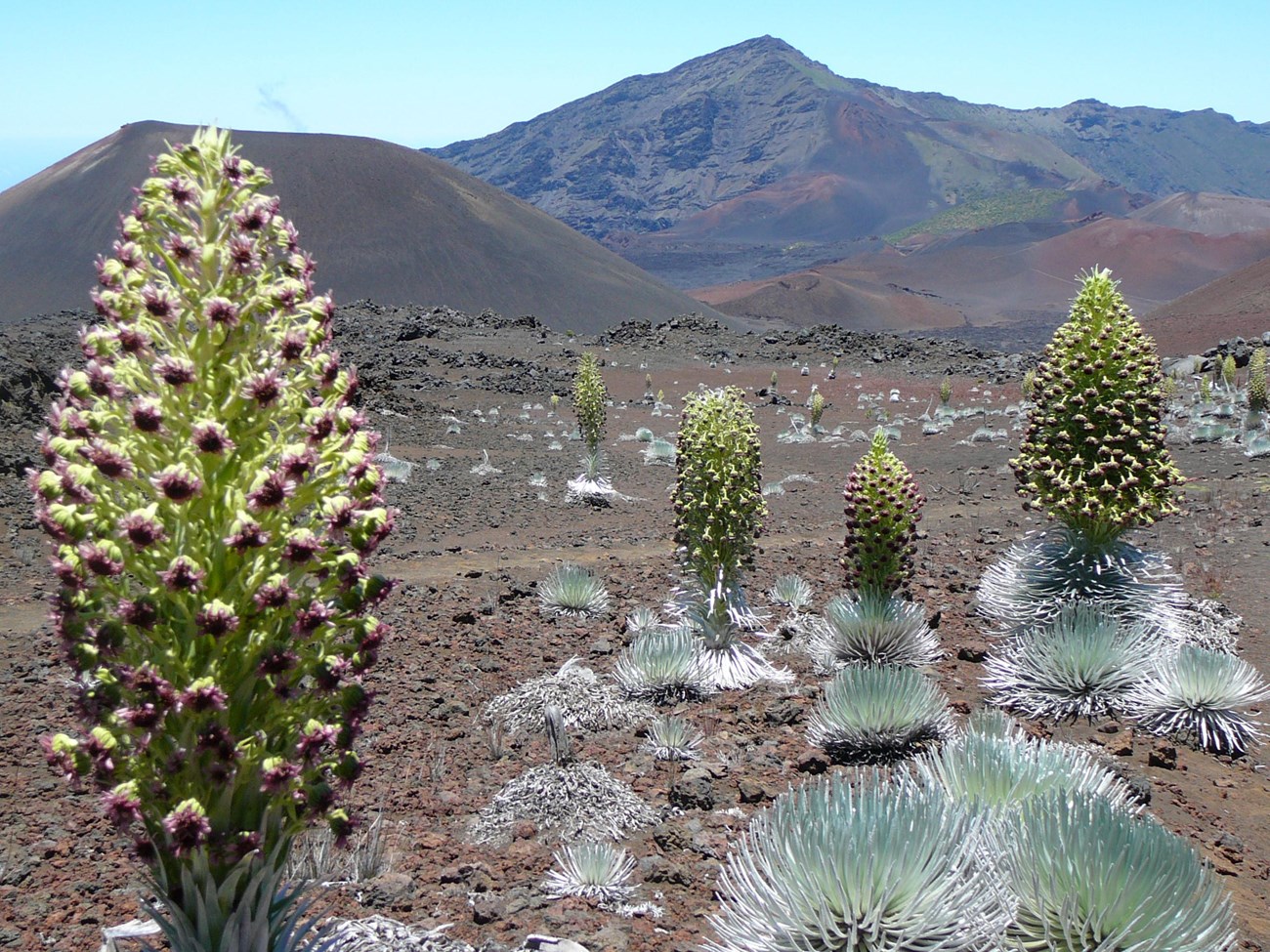
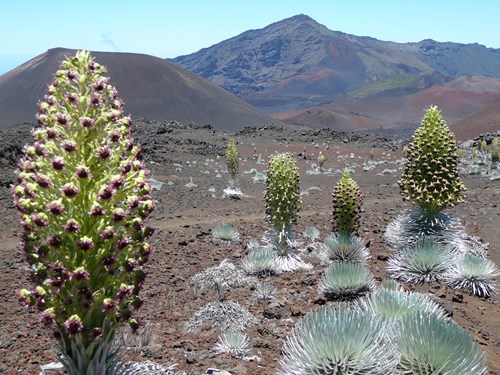
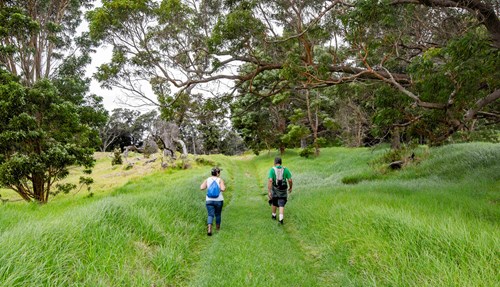
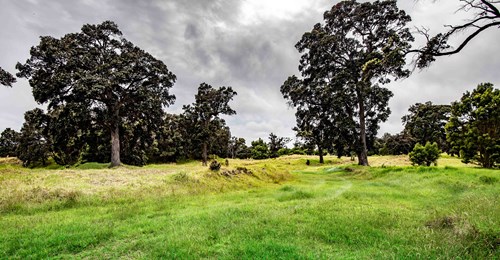
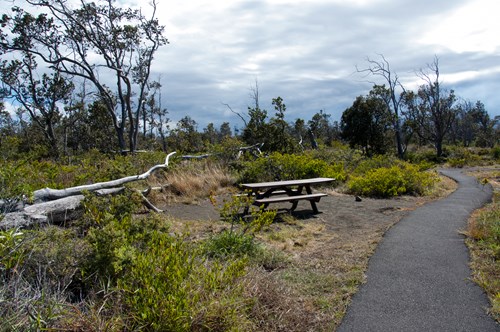
This special place vibrates with stories of ancient and modern Hawaiian culture and protects the bond between the land and its people. The park also cares for endangered species, some of which exist nowhere else. Come visit this special place - renew your spirit amid stark volcanic landscapes and sub-tropical rain forest with an unforgettable hike through the backcountry.
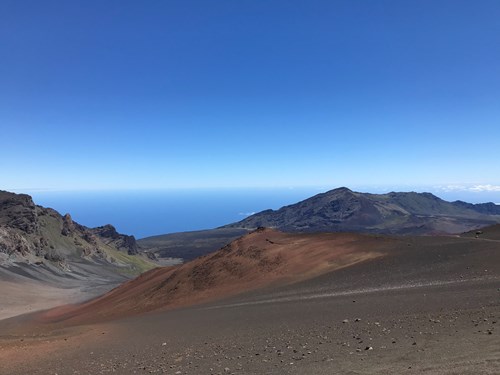
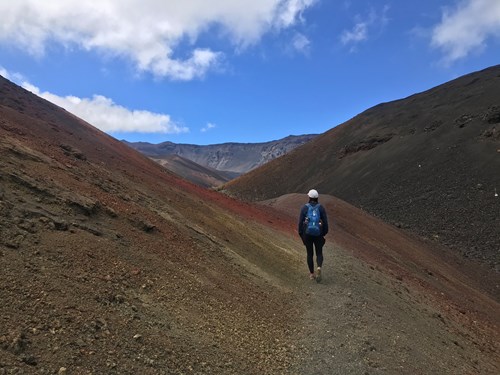
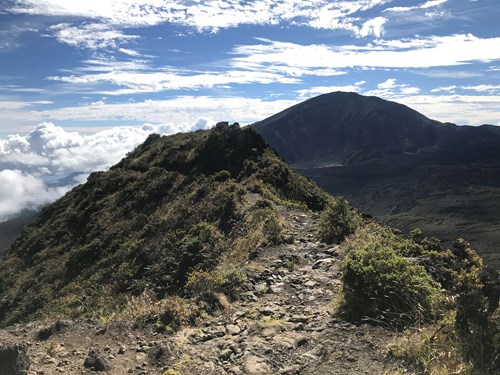
Enter the park's Wilderness on the Keoneheʻeheʻe (Sliding Sands) Trail and take a moderate out-and-back hike partway down the windswept cinder slope. This is among the most popular hikes in the park thanks to its unbeatable crater views. Takes about 1-2 Hours.
Experienced hikers can "thru" hike the crater from Keoneheʻeheʻe (Sliding Sands) Trailhead, across the crater floor, and out to Halemauʻu Trailhead. This hike is extremely strenuous and should only be undertaken by individuals who are equipped for a wilderness environment. Takes about 7-9 Hours.
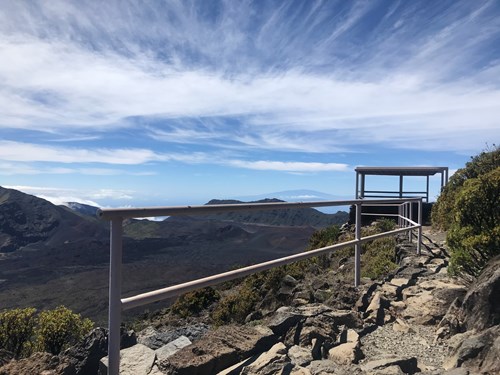
Take a short .3 mile (.5 km) roundtrip walk out to Leleiwi Overlook. Pass native plants on your way to a spectacular view of the crater and the Koʻolau Gap. Takes about 30-60 Minutes.
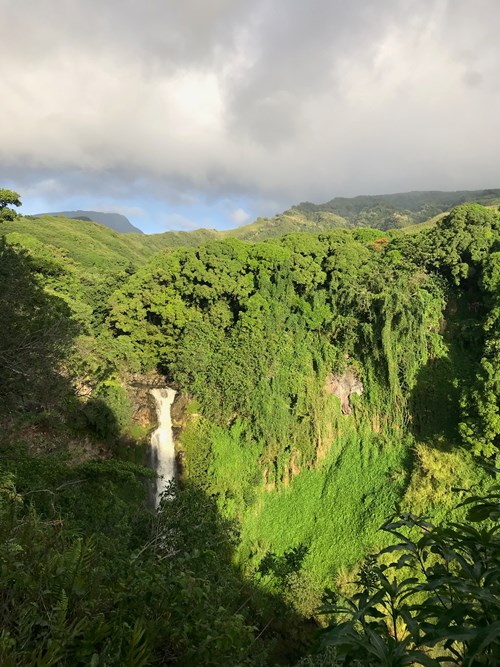
Golden light. Verdant forests. White waters. View Makahiku Falls from the Pīpīwai Trail in the Kīpahulu District of Haleakalā National Park. Takes about 1 Hour.
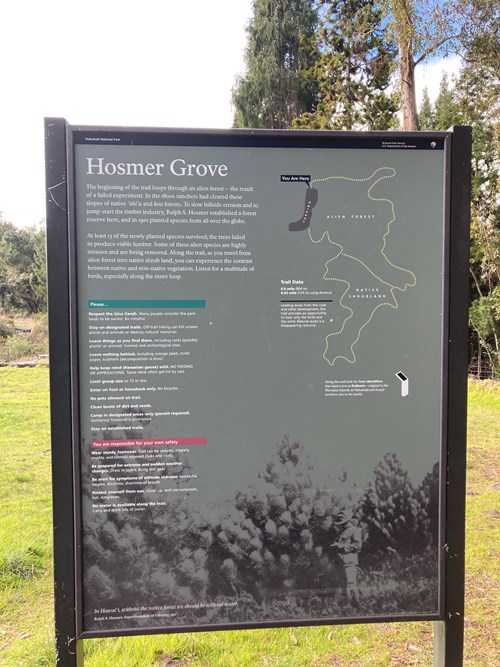
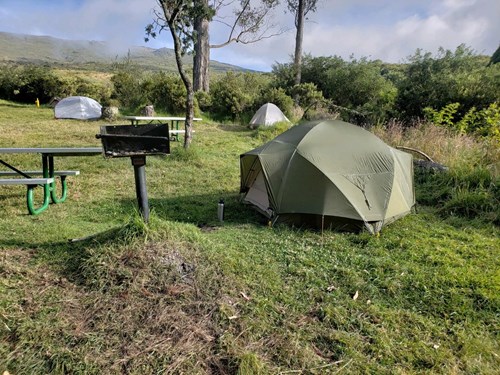
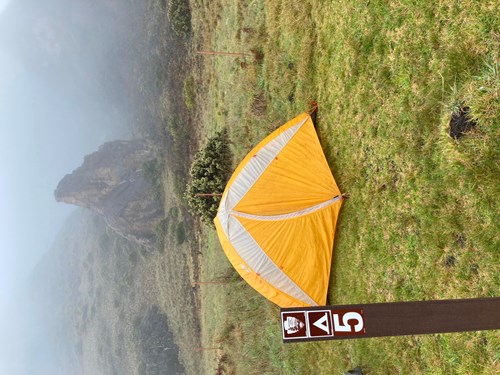
Hosmer Grove lies in the cloud belt of Haleakalā, just below the 7,000 foot level (2134m) in the Summit District. Be prepared for rain and cold weather. Nighttime temperatures can drop into the to near freezing (0°C); daytime highs average 50-65°F (10-18°C).
Heads up: Sites are reservable and often book up early.
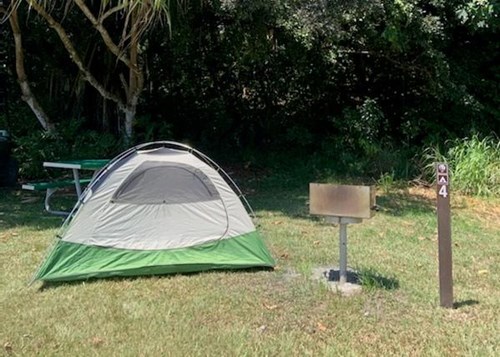
The Kīpahulu campground is about 1/8 mile (.2km) south of the Kīpahulu Visitor Center. It overlooks ocean cliffs and is a short walk from 'Ohe'o Gulch. The campground has picnic tables, BBQ grills, and pit toilets.
Heads up: Sites are reservable and often book up early.
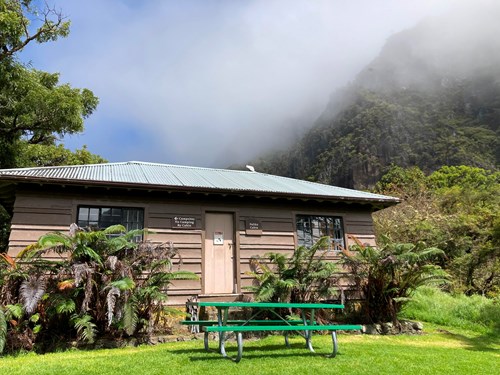
Located on the island of Maui, Haleakalā National Park maintains three wilderness cabins for visitor use-- Hōlua, Palikū, and Kapalaoa. All cabins are accessible only by trail from the summit area and require you to hike a minimum of 3.7 mi (5.9 km).
Heads up: Sites are reservable and often book up early.
There are two primitive wilderness tent areas which are accessible only by trail, Hōlua and Palikū. These sites are only reservable on recreation.gov. No first come-first serve sites are available.
Heads up: Sites are reservable and often book up early.
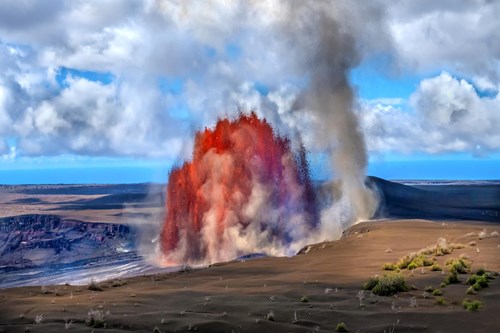
Hawai‘i Volcanoes National Park protects some of the most unique geological, biological, and cherished cultural landscapes in the world. Extending from sea level to 13,680 feet, the park encompasses the summits of two of the world's most active volcanoes - Kīlauea and Mauna Loa - and is a designated International Biosphere Reserve and UNESCO World Heritage Site.
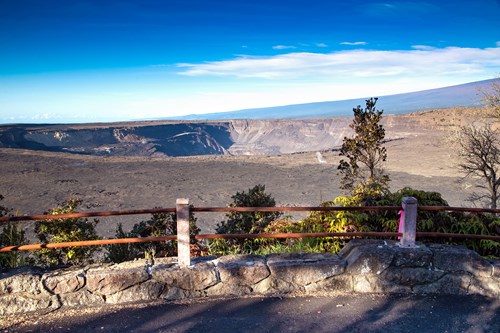
Hike down to the floor of Kaluapele (Kīlauea caldera), with possible longer connections to Byron Ledge, Kīlauea Iki, and Nāhuku. Takes about 1-2 Hours.
Catch views of Kīlauea caldera, feel the breath of the volcano at Steaming Bluff (Wahinekapu), and walk through lush rainforest. Takes about 1-6 Hours.
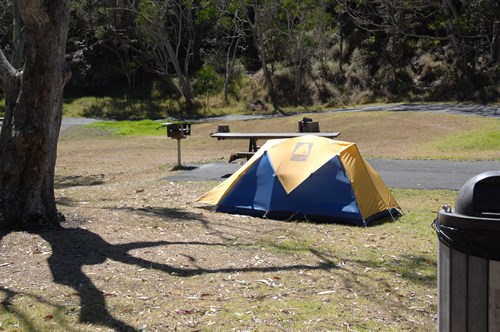
Nāmakanipaio Campground is located 31.5 miles south of Hilo on Highway-11 at 4,000' elevation. It is a large, open grassy area with tall eucalyptus and 'ōhi'a trees. This campground has restrooms, water, picnic tables and barbecue pits. Campfires are permitted in the barbeque pits only.
Heads up: 16 sites can be reserved and 16 are first come, first served.
Kulanaokuaiki is located off Hilina Pali Road at 3,200 feet (975 m), there are nine walk-in campsites with picnic tables. There is an accessible vault toilet; however, no water is available and campfires are not permitted. Use fueled camping stoves only.
Haleakala National Park is home to Maui's highest peak. Rising 10,023 (3,005 m) feet above sea level, Haleakala means "house of the sun" and is where demigod Maui lassoed the sun, slowing its passage so people had more time to dry kapa (cloth) and grow food.
Heads up: Tickets or tour times are booked on Recreation.gov.