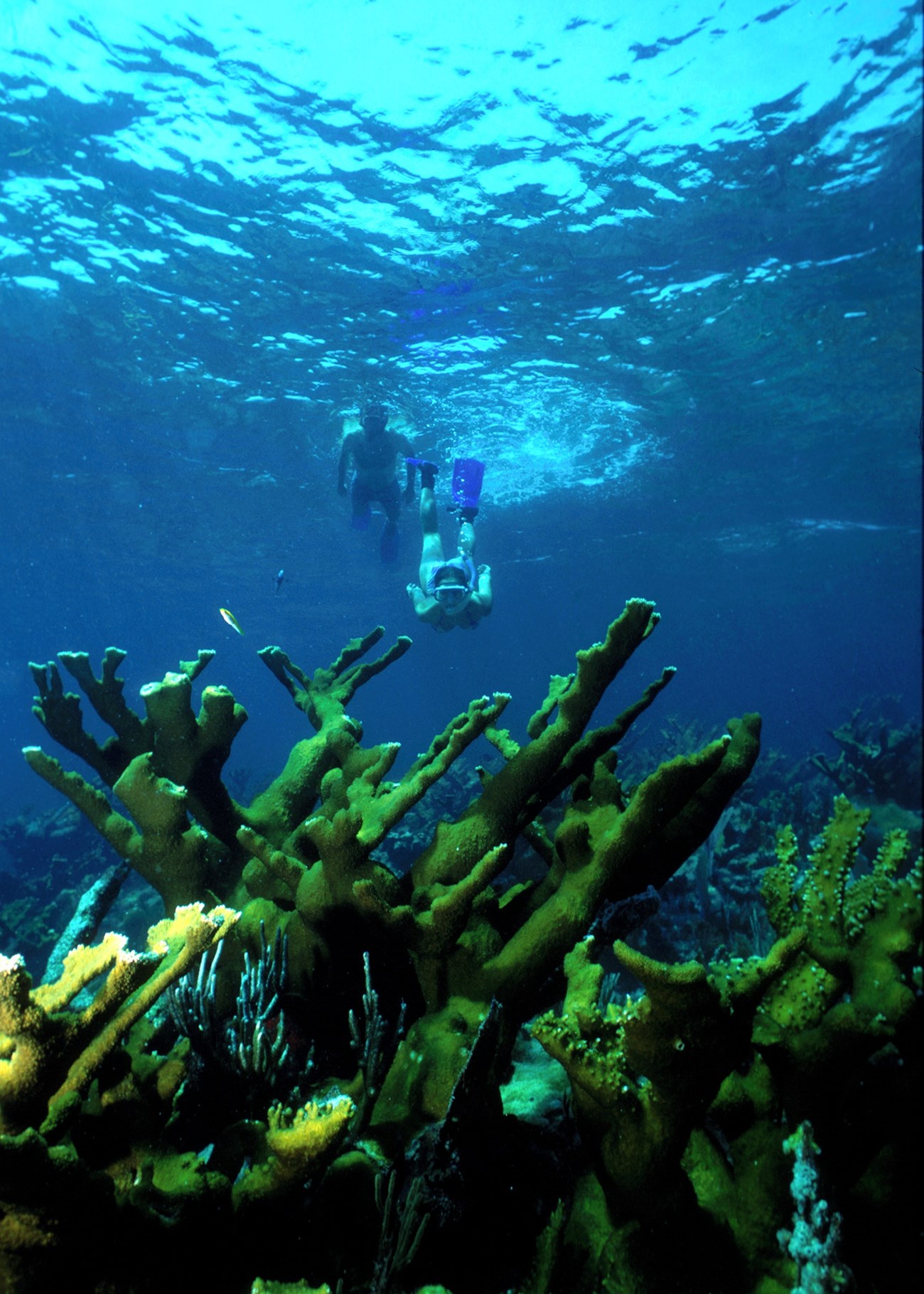
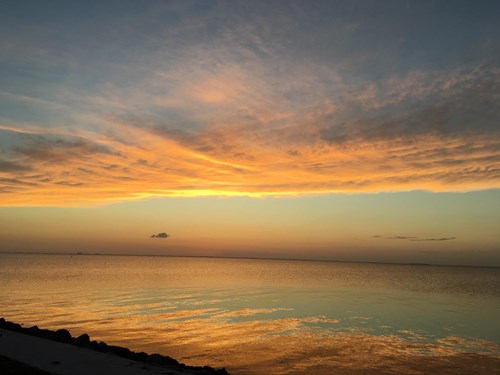
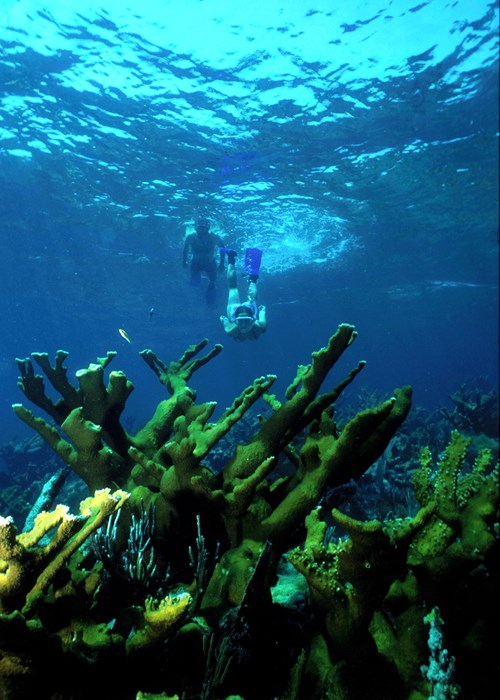
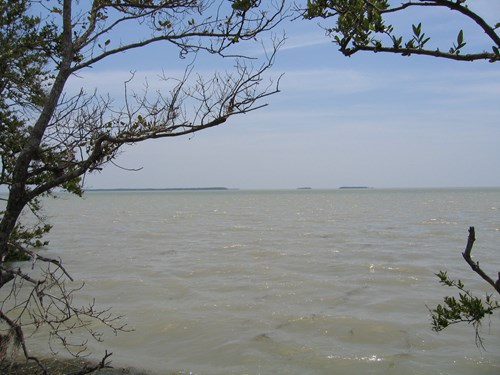
Within sight of Miami, yet worlds away, Biscayne protects a rare combination of aquamarine waters, emerald islands, and fish-bejeweled coral reefs. Evidence of 10,000 years of human history is here too; from prehistoric tribes to shipwrecks, and pineapple farmers to presidents. For many, the park is a boating, fishing, and diving destination, while others enjoy a warm breeze and peaceful scenery.
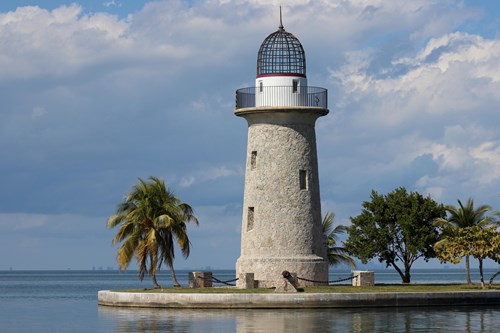
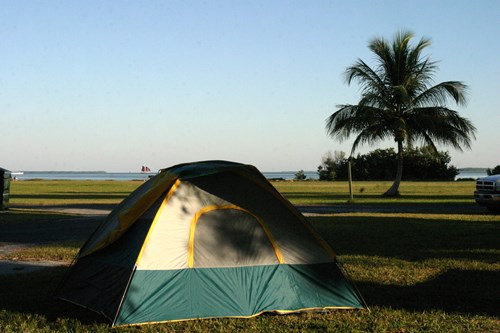
Boca Chita campground is located on an island. The only access is by boat. No services are available. Boca Chita Key features an iconic lighthouse and an open, waterside, grassy camping area with picnic tables and grills. Toilets are available, but there are no sinks, showers or drinking water.
Elliott Key campground is located on an island. The only access is by boat. Elliott Key features waterside and partially forested camping areas, picnic tables, and grills. Restrooms with sinks and cold water showers are available. A mile-long loop hiking trail starts near the campground.
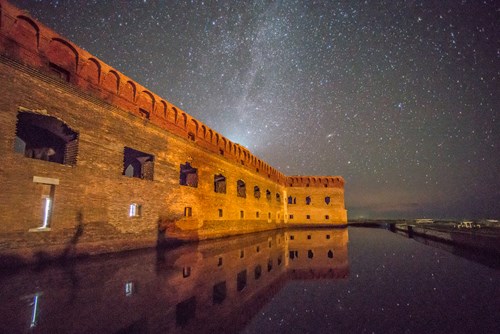
Almost 70 miles (113 km) west of Key West lies the remote Dry Tortugas National Park. This 100-square mile park is mostly open water with seven small islands. Accessible only by boat or seaplane, the park is known the world over as the home of magnificent Fort Jefferson, picturesque blue waters, superlative coral reefs and marine life, and the vast assortment of bird life that frequents the area.
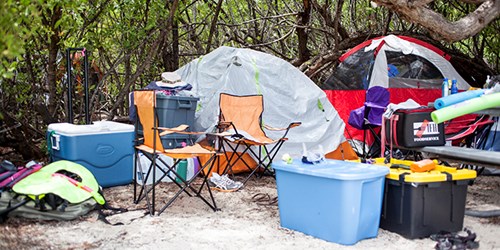
Garden Key, home to Fort Jefferson, has a primitive campground only a short walk from public dock and piers. Individual sites can accommodate up to three 2-person tents (6 persons max per-site) on a first-come, first served basis.
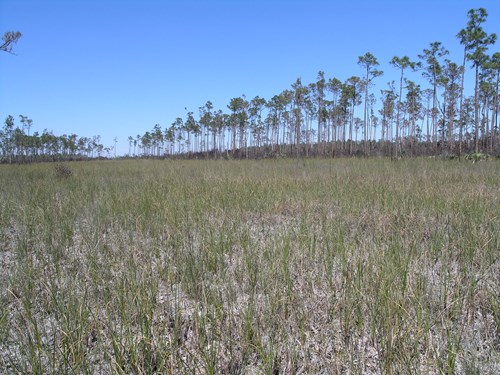
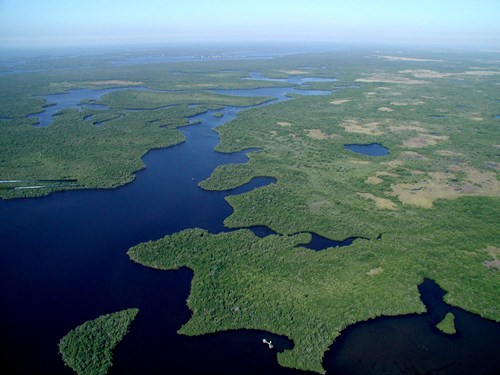
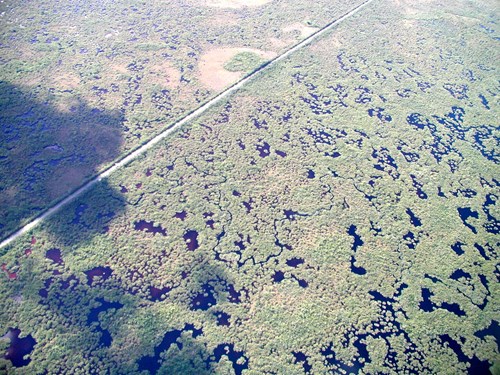
Established in 1947 as the first national park created for its biodiversity, Everglades National Park protects 1.5 million acres of wetland, forest, and marine habitats and the native plants and animals that call it home. With several international designations, the park provides a major source of drinking water for local residents of South Florida and recreational opportunities for all.
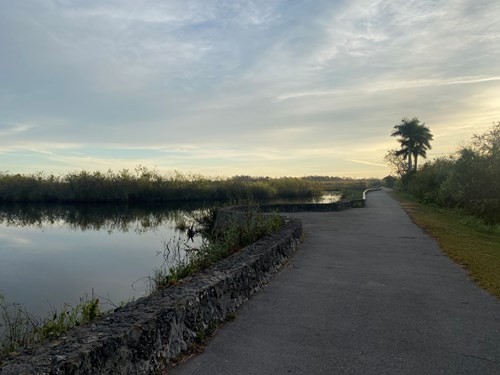
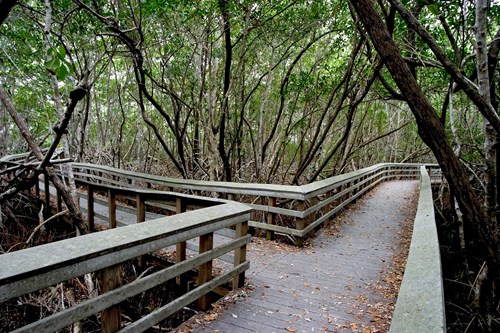
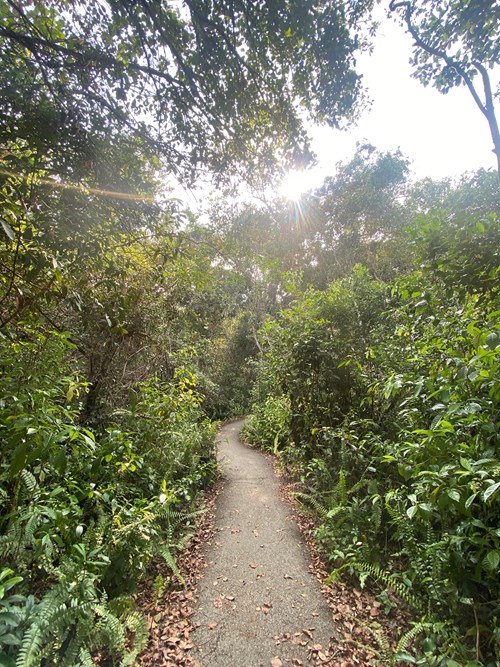
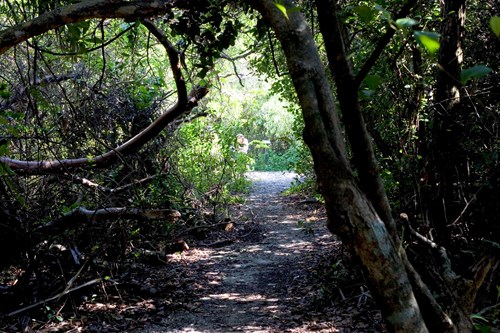
Bear Lake Trail is 1.6 miles one way. Journey through a dense hardwood hammock mixed with mangroves. The trail follows the old Homestead Canal, built in 1922, and is an excellent area for woodland birds. There are more than 50 different tree species.
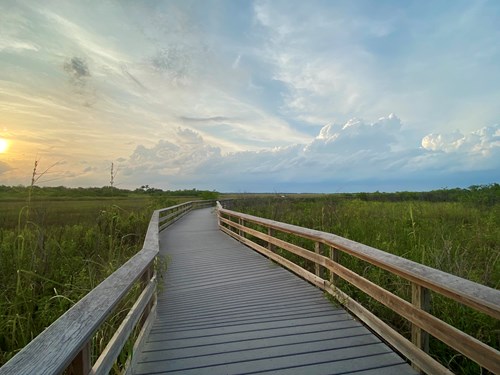
The famous Anhinga Trail is a self-guided pavement and boardwalk trail winding through and over sawgrass marsh and freshwater slough. A paved path leads you along the water and to a looping boardwalk, providing views into the prairie and the clear waters of the slough. Takes about 1-2 Hours.
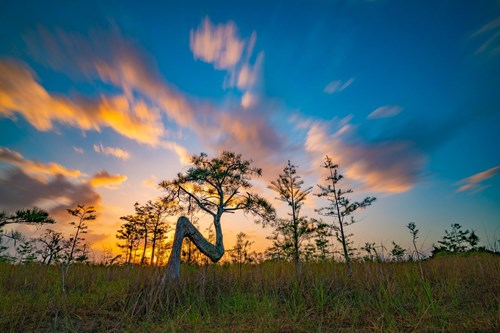
This trail runs true to its name since you traverse through three distinct ecosystems in one trail. The three ecosystems are Pine Rockland, Hardwood Hammock and Sawgrass Prairie. It is not wheelchair accessible and it is less than 0.8 miles (1200meters)
The famous Anhinga Trail is a self-guiding pavement and boardwalk trail winding through and over sawgrass marsh and freshwater slough. A paved path leads you along the water and to a looping boardwalk, providing views into the prairie and the clear waters of the slough.
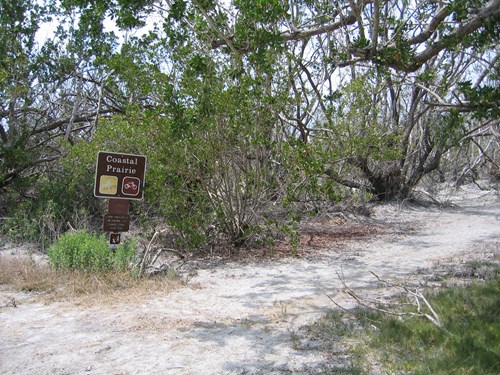
The trail is 2 miles (3.2 km) round trip. Meander along the shore of Florida Bay, watching for remnants of an outpost fishing village. Observe the effects of hurricanes Katrina and Wilma on the landscape. Begin at the Coastal Prairie Trailhead at the back of Loop "C" in the Flamingo Campground.
A short accessible .2 miles trail that winds through a willowhead. The boardwalk allows visitors to view the wildlife all around them. Open year round.
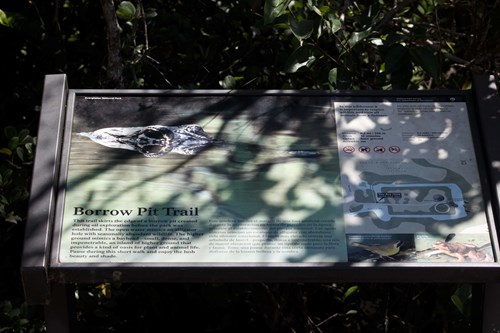
Trail that borders the borrow pit at the Shark Valley Tower. Limestone was gathered or 'borrowed' to build local construction before the park. This is a great place to see alligators and other wildlife, open year round
Christian Point is 1.8 miles one way. Wander a rustic path through a wide diversity of habitats. The trail begins in dense mangroves and buttonwoods full of bromeliads, or airplants. Next, investigate the unusual, salt–loving vegetation of open coastal prairie.
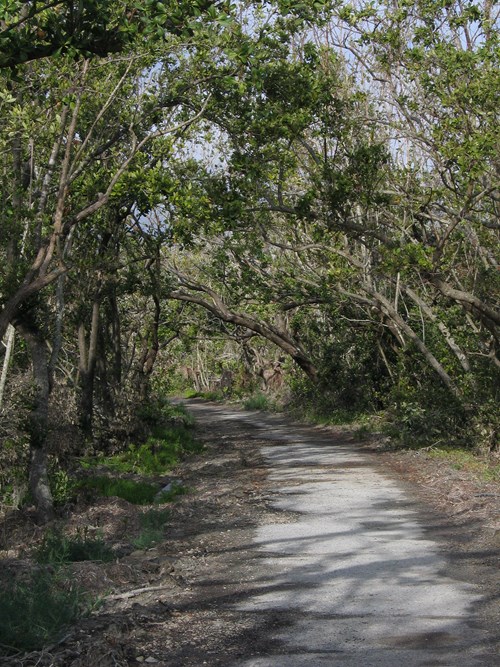
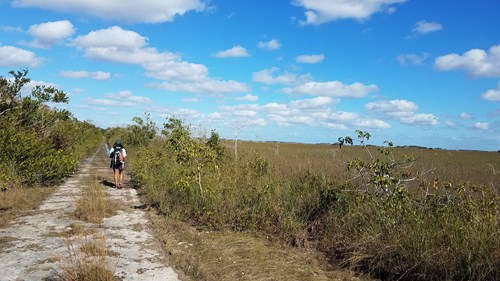
This trial is 7.5 miles one way. Step back in time as you walk this old road once used by cotton pickers and fishermen. Open prairies of succulent coastal plants dotted with shady buttonwoods surround you as you journey towards the shore of Florida Bay.
A new waterway along the west side of the park – the Everglades Paddling Trail – was approved in the 2015 General Management Plan. This 120-mile route provides additional wilderness and backcountry opportunities and includes several segments totaling about 30 miles that have boating use…
The Gumbo-Limbo trail is a self-guided, paved trail meandering through a shaded, jungle-like hardwood hammock. In the hammock, hardwood trees such as oaks and gumbo limbos form a dense canopy overhead. Look for majestic royal palms, ferns, and air plants such as bromeliads.
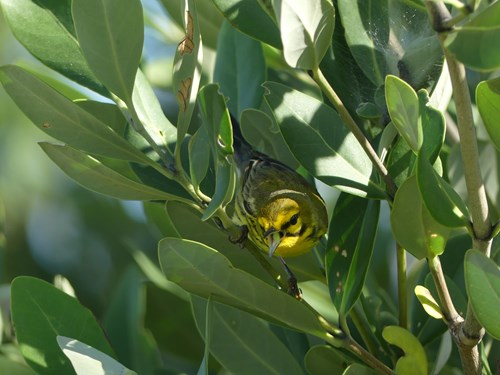
Mingle with a variety of birds and butterflies as you amble along the shore of Florida Bay. Old pier pilings are a reminder that Flamingo was once a small fishing village.
The Halfway Creek and Loop Trails are accessible from the Gulf Coast Visitor Center in Everglades City or from the Big Cypress Welcome Center on Sea Grape Drive off of US 41. The Creek is 7.3 miles long from the Big Cypress Welcome Center to the Gulf Coast Visitor Center.
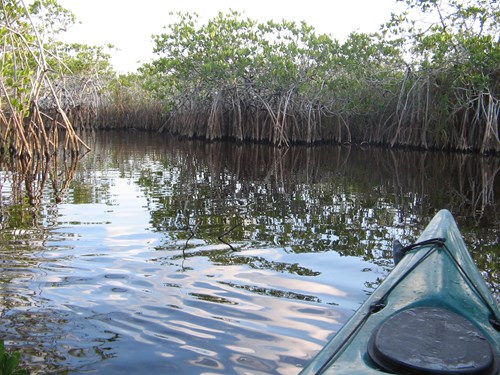
Hell’s Bay is 3.0 miles to Lard Can Campsite, 3.5 miles to Pearl Bay Chickee, and 5.5 miles to Hells Bay Chickee. “Hell to get into and Hell to get out of,” or so the old timers claimed. This sheltered route weaves through mangrove creeks and ponds to a series of small bays beyond Lard Can.
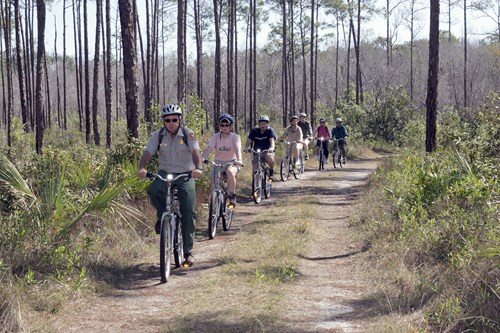
Connecting trails through the Pinelands run 7 miles (11 km) west from the Long Pine Key campground to Pine Glades Lake along the main park road. It is advisable to look at trail map to understand the network of trails.
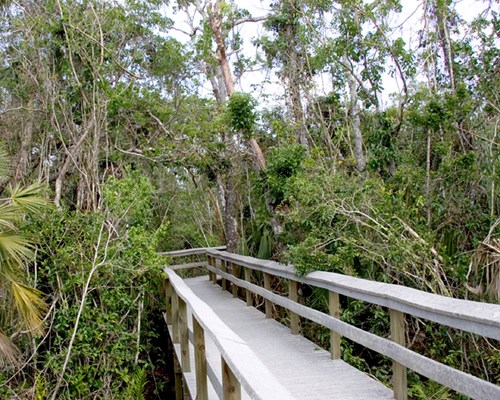
This self-guiding boardwalk trail meanders through a dense, jungle-like hardwood "hammock." Lush vegetation includes gumbo-limbo trees, air plants, and the largest living mahogany tree (Swietenia mahogani) in the United States.
This is the first stop of the audio tour, Meet Everglades. A self-guided tour that introduces visitors to the wonders of what makes Everglades National Park so special.
This trail is 7 miles round trip from Coot Bay Pond. Venture inland through the mangroves on this trail connecting the Buttonwood Canal, Coot Bay, Mud Lake, and Bear Lake. Birding is often good at Mud Lake.
Nine Mile Pond is a 5.2 mile loop. This scenic trail passes through shallow grassy marsh with scattered mangrove islands. Watch for alligators, crocodiles, wading birds, and an occasional endangered snail kite. The trail is marked with numbered white poles.
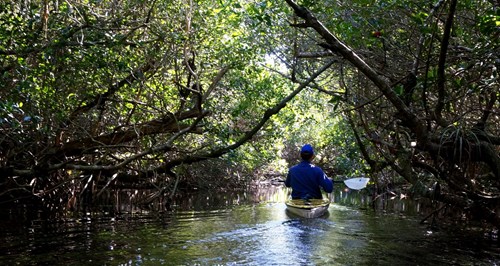
Noble Hammock is a 2 mile loop winding through a maze of shady mangrove lined creeks and small ponds, the sharp turns and narrow passageways require good maneuvering skills. Enjoy a “crash” course. Check for low water levels during the dry season. Motors prohibited.
The historic Old Ingraham Highway was the first motorway to Flamingo but now provides at least 10 miles (one way) of backpacking into the heart of the Everglades. There are two backcountry campsites along this trail.
A short, .3 mile trail over a rough limestone surface. This hammock provides an up close view of the solution holes that permeate the floor of the Everglades, open year round.
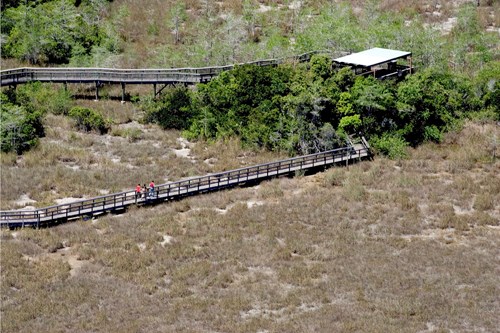
This elevated wooden boardwalk leads to an overlook that offers sweeping vistas of the "river of grass". This raised observation platform provides close up views of dwarf cypress trees, magnolia, air plants and string lillies. The trail is 0.16 miles or 260 meters roundtrip, Wheelchair accessible.
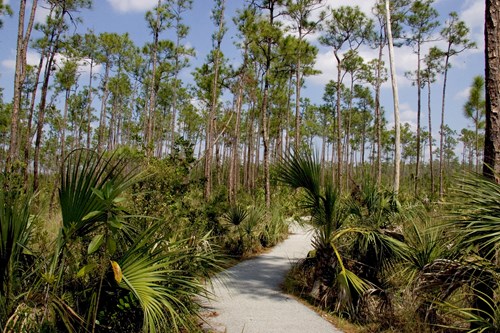
Pinelands Trail is a short, paved loop trail is 2 miles west of the Long Pine Key turnoff on the main park road. This trail loops through a forest of pines, palmettos, and wildflowers. It is 0.4 miles (650 meters) roundtrip. Wheelchair accessible.
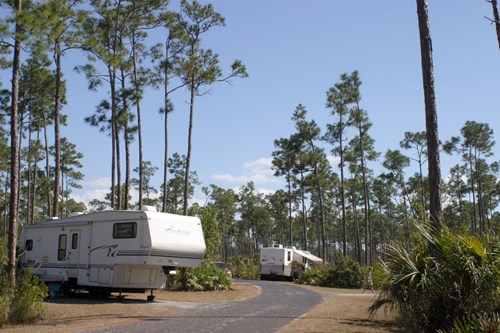
The Flamingo campground is one of two drive-in campgrounds accessible from the Homestead entrance of the park. It offers solar-heated showers, two dump stations, picnic tables, grills, and an amphitheater for seasonal Ranger programs.
Heads up: 159 sites can be reserved and 28 are first come, first served.
Long Pine Key campground is open seasonally November-May. It is one of two frontcountry camping options run by the “Flamingo Adventures'' concession. Reservations are available for RV’s and tents along with first come first serve sites.
Heads up: 108 sites can be reserved and 108 are first come, first served.
Boca Chita Key is only accessible by boat. No services are available on the island. Boca Chita Key is the park's most popular island. It features beautiful waterfront views, a grassy camping area, picnic tables and grills. Toilets are available, but there are no showers, sinks or drinking water.
Heads up: Reservable on Recreation.gov. Popular dates book up early.
Eliott Key is only accessible by boat. No services are available on the island. Elliott Key is the park's largest island. Restrooms with sinks and cold water showers, picnic tables and grills are available. Drinking water is available, but bring water as a precaution if the system goes down.
Heads up: Reservable on Recreation.gov. Popular dates book up early.